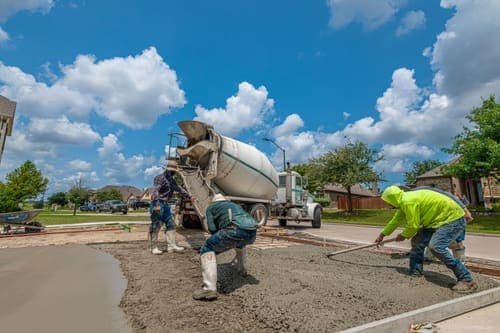
Rhode Island has four seasons: winter, mud, pothole, and orange barrel. Three of those are hard on concrete, and the fourth one is just us trying to fix it before the frost comes back.
I'm Paul. My crew pours flatwork and structural work across Providence, from the East Side and Federal Hill out to Cranston, Pawtucket, North Providence and Warwick. The reason slabs fail here is almost never the mix in the truck. It's what went underneath it. We dig, we put down six inches of compacted process stone, we use an air entrained mix that can take the freeze thaw beating a February in the Ocean State hands out, and we saw the control joints within about twelve hours of the pour so the slab cracks where we told it to instead of wherever it feels like. Skip the base and you get a driveway that looks great in October and is a jigsaw puzzle by April.
Here's what I promise you about how we behave, which matters more than any adjective I could stick in front of my own name. We show up in the window we gave you. You get a person on the phone, not a menu. Nobody explains rebar to you in a tone you'd want to slap. And when we pull out, the forms, the offcuts and the washout leave with us.
The work itself runs the range. A new concrete driveway or a concrete patio, a set of concrete steps that isn't pitched to dump rain at your door, granite backed curbs, sidewalks and general concrete flatwork, and the concrete paving and commercial concrete side for lots and loading areas. We pour a concrete foundation, we build a concrete retaining wall that has drainage behind it instead of hope, and we do stamped concrete and other decorative concrete finishes when you want the slab to look like something. When a slab is tired rather than dead, concrete repair or resurfacing beats a teardown. When it's dead, concrete removal comes first.
Below you'll find each of those in plain English, the towns we cover, what changes a number, and the questions people ask me before they book. Read on, then call me at (401) 394-6425 and I'll come stand on it with you.
Curbs
Curbs take more punishment than anything else we pour. Plow blades in February, oil trucks clipping the corner, and the neighbor who parks by braille. We form them over a compacted gravel base with a six inch exposed face and tool a control joint every ten feet or so, because curbs will crack somewhere and I'd rather choose where. Skip the base prep and frost heave lifts the line by the second winter, and then you're looking at concrete repair on something barely a year old.
Most residential curb lines form up and pour in a day, with foot traffic the next morning and vehicles after about a week. What moves the number is whether the old curb needs concrete removal first, and how much of your concrete driveway apron ties back in.
On commercial lots we set curbing and islands as part of the concrete paving, drainage flow line included.
Stamped Concrete
Stamped concrete is the one where timing rules everything. Once the slab is poured, we get a window of maybe an hour to lay the mats before the mix stiffens up, and if a crew misses it you end up with a shallow, muddy pattern that looks like a rubber stamp that ran out of ink. So we bring enough hands to stamp the whole pour in one pass. Ashlar slate, seamless stone, wood plank, running bond brick, they all work here as long as the base is right underneath.
Pattern complexity, the number of colors, and how many square feet you're covering are what move the price on this work.
What kills stamped work in Rhode Island is salt and skipped sealer. Reseal every two or three years and it holds its color for a long time.
Concrete Repair
Not every crack means tearing it out.
Salt trucks, plow blades and February freeze‑thaw are brutal on concrete, and Providence hands you all three before Valentine's Day. So a lot of what we do is concrete repair: patching spalled concrete steps, lifting settled concrete flatwork, routing and filling the cracks crawling across a concrete patio, rebuilding the chewed‑up apron where a concrete driveway meets the street.
If the slab underneath is still sound, resurfacing buys you a fresh top and skips the concrete removal entirely. If a concrete retaining wall is leaning or a concrete foundation is weeping at the cold joint, that's structural, and I'll tell you so instead of smearing patch over it. Repairs to stamped concrete and decorative concrete finishes we'll do, though color match is never perfect, and I say that up front. Broken curbs, cracked concrete paving in a lot, commercial concrete slabs, same deal.
Call me, Paul, at (401) 394-6425.
Concrete Driveway
Your driveway spalls a little more every March, and the salt trucks coming down off College Hill don't help.
A new concrete driveway starts with concrete removal and a base that's actually compacted, usually 6 to 8 inches of processed gravel, because the slab is only as good as what's under it. We pour 4 inches for cars, 5 or 6 if you're parking a work truck, air-entrained mix for our freeze-thaw winters. Then we saw the control joints within about 12 hours, so the slab cracks where we put the line instead of wherever it feels like it. Stay off it a week, full strength at 28 days, and no rock salt that first winter.
What moves the price is slope, truck access, and how much of the old apron and curbs have to come out with it.
Decorative Concrete Finishes
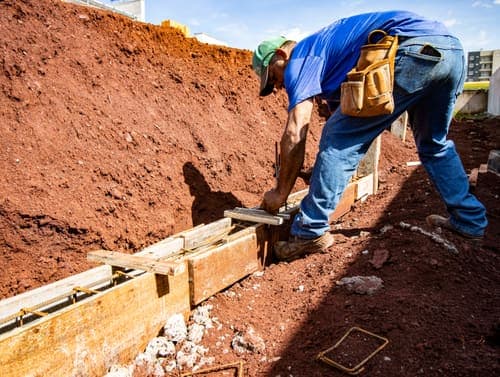
Want the slab to look like something other than a sidewalk? That's the whole point of decorative concrete finishes. We color the mix integrally rather than dusting hardener on top, because a dry shake troweled in too early blotches, and after a few Rhode Island winters it wears off the high spots where you walk. At that point your only real fix is resurfacing the whole thing. Exposed aggregate looks sharp on a concrete patio and hides the odd scuff. I steer folks away from salt finish up here, since those little pockets hold water and pop in the first hard freeze. Saw cut scoring with a stain gives interior concrete flatwork a tile look for a lot less trouble than tile. We run the same color through concrete steps and curbs so the approach matches instead of looking like three separate jobs, then seal once the slab has cured and again every couple of years.
Concrete Foundation
A foundation is the one part of your house nobody ever sees and everybody pays for twice when it's wrong. We dig footings below the frost line, and around here that means at least three feet down, set the rebar, and pour a 3,000 to 4,000 psi mix depending on what's going up on top. Then walls, keyway, damp-proofing and a perimeter drain in stone, because water leaning on a wall through a Providence spring is what pushes it in.
The mistake I see most is backfilling too soon. Give the wall a week and let the first floor brace it, or you're buying concrete repair before you've bought furniture.
Excavation to stripping forms runs a couple of weeks, longer when ledge turns up, and on the East Side ledge turns up a lot.
Concrete Patio
Your backyard cookout deserves better than a slab that puddles right where the grill goes.
A concrete patio starts underneath, where nobody looks. We want about six inches of compacted stone, then a four inch pour with rebar or fiber in it, sloped roughly an eighth of an inch per foot away from the house so runoff heads for the yard and not your basement door. Then we cut control joints every eight to ten feet. Concrete cracks. Joints just decide where. Skip them and by the second Providence winter you've got a crack wandering across your patio like it owns the place.
Most patios run two to three days, weather permitting. Walk on it the next day, keep the heavy table off it for a week.
Want a stamped concrete border, or one of the decorative concrete finishes we pour? Tell me when you call, (401) 394-6425.
Concrete Retaining Wall
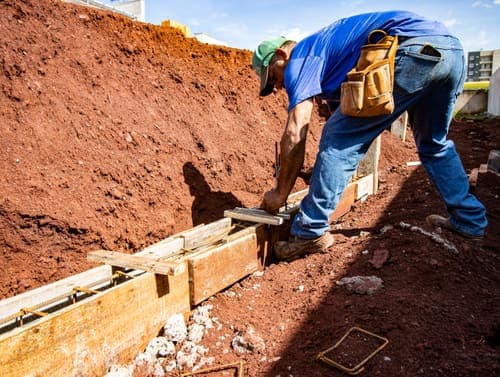
Half of this city is built on a hill, and anyone who has walked College Hill in February knows dirt does not stay put. A concrete retaining wall keeps your yard where you left it. We dig the footing below frost, usually three to four feet down, tie in rebar, and backfill with clean crushed stone over perforated pipe so water drains out the weep holes instead of shoving on the back of the wall. Skip that drainage and the wall leans by the third spring thaw, then bulges, then you are paying for it twice.
Most walls run a few days to a week, longer if we are cutting concrete steps into the slope or holding up a concrete patio above. Height, soil and truck access decide the rest.
Commercial Concrete
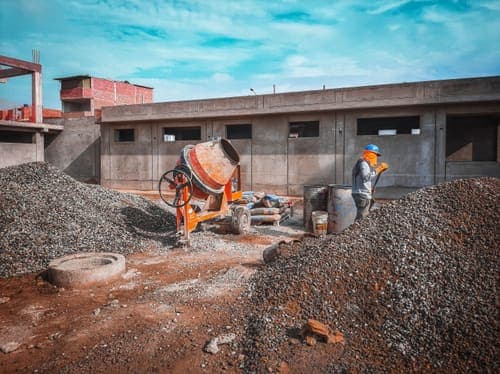
Storefronts on Wickenden, warehouse floors off Allens Ave, dumpster pads and loading docks. Commercial concrete has to keep working while we build it, so we pour in sections, tape off half the lot at a time, and hand it back to you in pieces instead of shutting you down for a week.
A slab that takes box trucks wants six inches over a properly compacted base with rebar, not the four inches and wire mesh a residential pour gets, and control joints cut inside about twelve hours so it cracks where we tell it to. Foot traffic in a week, full strength around 28 days. We do the concrete flatwork inside the building and the concrete paving, curbs and approach out front, plus concrete removal when a slab is past saving. If the base is still sound and only the surface is tired, resurfacing buys you winters. Salt spalling and plow gouges we handle as concrete repair before they reach the steel.
Resurfacing
Resurfacing buys you a new top without buying a new slab. We grind or shot blast the old surface, fill what needs filling, then bond a polymer-modified overlay roughly three eighths of an inch thick. You can walk on it the next day and park on it in three to five days. We won't lay one in late November either, because when the overnight temperature drops into the thirties the bond never really takes.
What sinks a resurfacing job is skipped prep. Skim an overlay over a slab that's cracked through and the first February thaw peels it up in sheets. If the base underneath is finished, straight concrete removal and a fresh pour is the smarter road, and I'll tell you that. Where the slab is sound, we can finish the overlay with decorative concrete finishes so your concrete flatwork doesn't read as a patch job.
Call me, Paul, at (401) 394-6425.
Concrete Flatwork
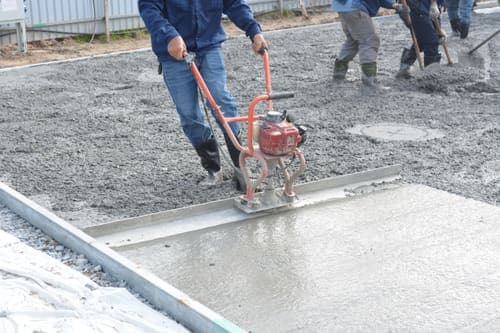
Flatwork is the flat stuff. Sidewalks, garage floors, walkways, landings, the slab your grill sits on. Most of what we pour counts as concrete flatwork, and most of what fails does so for one reason: a base nobody bothered to compact. We strip the soft soil, roll in process stone, and cut control joints the next day so the slab cracks on the line we gave it instead of straight through the middle.
Concrete moves, and Rhode Island winters give it plenty of reason to. We pour an air-entrained mix because the salt trucks come through every January, and a slab without air in it scales like a bad sunburn by April. A concrete driveway, a concrete patio and the concrete paving behind a Wickenden Street storefront all follow those same rules, as does commercial concrete poured on a weekend shutdown.
Curbs, concrete steps and a concrete retaining wall need forms and their own pour day. Stamped concrete and decorative concrete finishes are flatwork in nicer clothes. When a slab is past concrete repair, we talk resurfacing or full concrete removal. A concrete foundation is its own animal entirely.
Concrete
Concrete is a patient material. Mix it right, cut control joints every ten feet or so, use an air entrained mix, and the slab will outlast the truck it rode in on. Skip the air entrainment and our freeze thaw winters will pop the surface off by the second February.
So we pour the flat work and the vertical: a concrete driveway that plow blades have chewed up, a concrete patio sized for a July cookout, a concrete retaining wall holding one of those College Hill slopes in place, sidewalks and curbs the city inspector will actually sign off on, concrete steps that have started to rock underfoot, a concrete foundation for an addition, and commercial concrete for lots and loading pads.
When something's already failing, concrete repair or resurfacing often beats a tear out, though sometimes concrete removal is the only real answer and we'll say so.
Want it to look like something? Stamped concrete and decorative concrete finishes go on the same slab, same day. Grade, base, and finish work is what separates concrete flatwork and concrete paving that lasts twenty years from the kind that spiderwebs in three.
Concrete Steps
Every triple decker on Federal Hill has a front stoop, and most of them are tired. When we pour concrete steps we dig footings below the frost line, right around 42 inches here, and tie rebar through the risers so the whole set moves as one piece. Steps poured on loose fill go hollow underneath, then a tread snaps off in February and your mail carrier is having a very bad morning.
We keep the rise consistent, about 7 inches, with an 11 inch tread, because your foot learns the first step and expects the rest to match. Broom finish for grip. Handrail sleeves set while the mud is still wet, not drilled in later.
If the treads are just spalling from years of ice melt, concrete repair beats concrete removal. If they've settled away from the concrete foundation wall, they come out.
Concrete Removal
Before anything new goes down, the old slab has to come up. Concrete removal is saw, hammer and skid steer work: we score clean lines so your neighbor's good concrete stays right where it is, break the panels into pieces we can lift, and haul it to a recycler instead of parking a rubble pile on your tree lawn until Columbus Day.
Thickness and access move the job. A four-inch concrete patio comes out in a morning. A six or eight-inch pad with mesh and rebar, an old concrete foundation, or a run of curbs tied into the street takes longer, and a 32-inch side gate turns machine work into wheelbarrow work in a hurry.
I'll also talk you out of it. If your concrete driveway is only tired on top, or your concrete steps need patching, resurfacing or concrete repair beats demolition and I'd rather tell you that up front.
The step crews skip is the subgrade. Pull a slab, leave soft chewed-up dirt behind, and your new concrete flatwork cracks by the first February thaw. We recompact and regrade before anyone touches a form, same as we do on commercial concrete tear-outs where the lot still has to work.
Call me, Paul, at (401) 394-6425.
Concrete Paving
Paving is the heavy end of concrete flatwork: parking aprons, alley approaches, loading pads, the long ribbon of slab running beside a triple decker on the East Side. Most of the work happens before anybody sees concrete. We cut the subgrade, lay and compact six to eight inches of gravel, set reinforcement, then saw control joints within a day of the pour so the slab cracks where we put the line instead of wherever it feels like. Concrete paving without that base looks sharp in September and starts heaving by February, and Providence hands you dozens of freeze thaw cycles to prove it. We use an air entrained mix and a broom finish, because a slick slab plus a nor'easter is a lawsuit waiting to happen. Old cracked slab has to come out clean first, so concrete removal is usually day one and the pour follows.
Areas we serve
I'll take the mixer anywhere I can get it down the street, and around here that rules out fewer blocks than you'd think. We pour in:
Federal Hill, Silver Lake, Olneyville, Elmhurst, Mount Pleasant, Smith Hill, Hope, Blackstone, Wayland Square, Fox Point, Washington Park, Elmwood, Cranston, Pawtucket, East Providence, Riverside, Rumford, North Providence, Johnston, Warwick, Barrington and Seekonk.
Federal Hill and Fox Point are one-way and parked solid, so a concrete driveway or a fresh set of concrete steps down there gets a 6am start before Atwells wakes up. On the hills in Mount Pleasant, plenty of back yards need a concrete retaining wall before anyone talks about a concrete patio. Riverside and Rumford take salt air on top of road salt, so curbs and exposed concrete spall first there, and concrete repair and resurfacing outrun new work.
Triple-deckers in Olneyville and Smith Hill sit on fieldstone, which means concrete foundation jobs start with concrete removal and an honest look underneath. Cranston and Warwick lots run flatter and newer, better ground for concrete flatwork, concrete paving, stamped concrete and decorative concrete finishes.
Commercial concrete out in Seekonk or Barrington we book in blocks. A small patch that far out waits until there's a second job nearby, because the drive shouldn't cost you more than the pour does.
Frequently asked questions
What kind of concrete work do you do around Providence?
Mostly residential, and mostly the stuff you walk on and park on. We pour a concrete driveway, a concrete patio, front walks and concrete steps, we build a concrete retaining wall where a yard drops off toward the neighbor, and we form footings and a concrete foundation for additions. Garage floors, basement slabs, sidewalks, all the concrete flatwork in between.
Do you take commercial jobs?
Yes. Commercial concrete here usually means dock aprons, ADA ramps, sidewalk panels and parking lot concrete paving, along with the poured curbs that plow drivers clip every January. We can pour before you open or after you close so your lot isn't fenced off at noon.
What drives the price?
Square footage is only the start. Access matters most, since a chute pour off the truck is a different day than wheelbarrowing 90 feet to a backyard. Then thickness, 4 inches for a walk versus 6 for a driveway, whether there's old slab to break out and haul, reinforcement, and the finish you pick. The concrete itself is a smaller slice of the bill than people expect.
How long before I can use it?
Walk on it after 24 to 36 hours, park a car on it after 7 days, and give it the full 28 days before a loaded truck or a dumpster goes on it. Skip the rock salt the first winter. It pits new slabs. My driveway is cracked. Repair or replace? One of three answers, and ten minutes on site tells us which. Tight cracks and a solid base mean concrete repair, routed and filled. A sound slab with a chewed up surface is a candidate for resurfacing. But if it's heaved, sunken or broken into pieces, you're looking at concrete removal and a fresh pour, and patching it just buys you a season.
What's the difference between stamped and a decorative finish?
Stamped concrete is texture, pressed into the wet slab with mats that read as bluestone, brick or wood plank. Decorative concrete finishes is the wider bucket: broom, exposed aggregate, integral color, saw cut patterns. Stamped work wants resealing every 2 to 3 years or the color goes flat.
Can you pour in the winter?
Usually into early December, then Rhode Island stops cooperating. We won't place on frozen subgrade, and under about 40 degrees we're using blankets and a hot water mix. Spring slots go early, and the May calendar tends to fill up in February.
What if it cracks?
Every slab cracks somewhere. Our job is deciding where. We saw the control joints within about 12 hours, roughly every 8 to 10 feet on a 4 inch slab, over 6 inches of compacted processed gravel. If it fails because we rushed the base, that's ours to fix.
Ready when you are
Concrete has a season here. We pour from about April into late November, and once the nights sit below forty degrees the ground stops cooperating and so does the mix. Spring fills up first, and I'd rather tell you we're a few weeks out than pretend the truck is idling in your street.
Here's what a call gets you: I come out, walk the property with you, measure what's there, and hand you a written estimate. It costs nothing and it books nothing. The number is (401) 394-6425.
Tell me what you're looking at. A concrete driveway that's spalling, concrete steps pulling away from the porch, a concrete foundation for the addition, a concrete retaining wall holding a hill off your fence. We do concrete repair and resurfacing on slabs worth saving, concrete removal on the ones that aren't, curbs and concrete paving and commercial concrete for lots off Allens Avenue, plus concrete flatwork, stamped concrete, decorative concrete finishes, and a concrete patio you can actually fit the family on in August.
Call me. Paul. (401) 394-6425.
P.S. If something's heaving now, don't wait for the ground to freeze. It only gets more expensive to fix in April.
See a few of our projects